

Search
User login
Common irregular past tense verbs
These can be used with activities sheets from www.commtap.org including:
- make phrases in past tense using irregular verbs 1
- make phrases in past tense using irregular verbs 2
Some common irregular past tense verbs for use in the above activities
See below if you are not sure what an irregular past tense verb is.
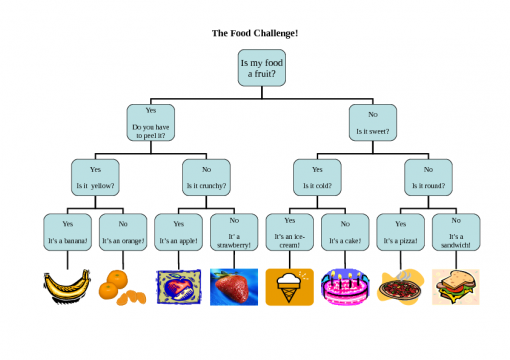
The Animal Challenge
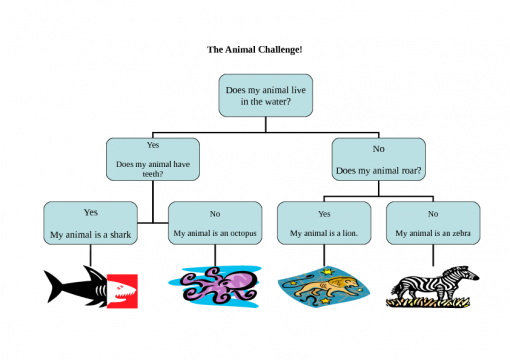
Flowchart of questions to identify an animal.
Created 15 May 2012; updated 18 July 2015.
Blank 3 question challenge
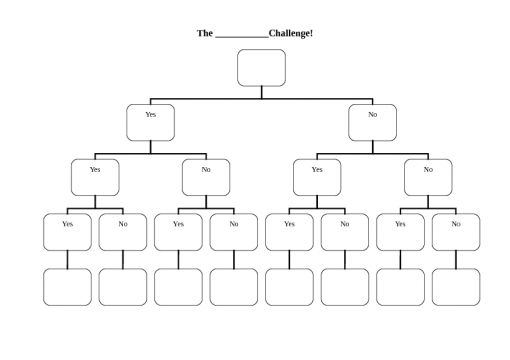
Template for creating questions using a flowchart: see https://en.commtap.org/language-communication/develop-question-skills for ideas as to how you could use this.
Created 15 May 2012; updated 16 July 2015.
Intermediate Listening Games
Intermediate listening games for groups.
Harder listening games
| Activity name and materials required |
Word Web Resources
Resources on this site for using word webs:
Symbols - overview and sources
Symbols, communication symbols or picture symbols, are a powerful and systematic support for communication.
Description
Communication symbols are sets of images which represent words and concepts in a language in a consistent way. They are designed for use with people having difficulties accessing text and for those with communication difficulties.
They can be used with:
Games and activities to help develop social skills
It can be difficult for some children to identify and understand social cues. To help develop the social growth of these children, there are lots of fun ways to help improve their social skills.
Coloured symbols for work and reward
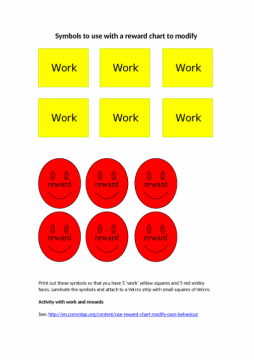
Created 23 April 2012; updated 16 July 2015.


 Like on Facebook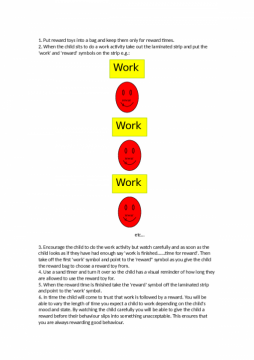
Prepositions
Prepositions are words which show the relationship between a noun (e.g. "cat") or a pronoun (e.g. "she") and other words in the sentence. For example, "My cat is on the table", "I went with Mike to the cinema". Prepositions can indicate relationships in time and position as well as other types of relationships. Information about prepositions (about.com).
Supporting the project
Commtap is a not-for-profit project. If you would like to help keep Commtap online, please make a donation.
Auditory discrimination of minimal pairs
| Activity/strategy name and materials required | How to do the activity | Key principles for doing the activity and comments |
|---|---|---|
| Main instructions Pictures of minimal pair words (e.g. key/tea) - photocopy them on to card (e.g. 6 of each word) so that you can't see through the card. | 1. Put one of each picture (e.g. key and tea) on the table, face up. 2. Mix up the rest of the pictures and put them in a pile face down. 3. Take one picture from the pile, don't let the person see it! 4. Say what is on the picture (e.g. key). 5. Make sure you present the pictures in a random order so that the person can't predict what's coming next. 6. The person has to find the appropriate picture on the table. | These are the main instructions for the activities. Use this with the games below. |
| Lotto game Lotto boards (4 pictures to a board. Use pairs of words from the list above, but do not put both words of a pair on the same board) Corresponding picture cards |
Make a choice between snacks
| Activity/strategy name and materials required | How to do the activity | Key principles for doing the activity and comments |
|---|---|---|
| Snacks A small choice of snack items to choose from - in small pieces - for example banana, apple, orange, crisps (the idea of having the items in small pieces is that it gives lots of opportunities to practice the request); Something uninteresting - e.g. a piece of paper; Pictures of the food items. |
| Key strategies - you may need to come back to these as and when necessary: Introduce each food item; Check which ones the people are interested in; Demonstrate the asking for and getting of an item - e.g. with another member of staff; Wait - give time for the person to respond or initiate; Offer a "forced alternative", e.g. "apple or orange?" - swap around the order in which you give the alternatives to check that the person is not just saying the last thing you say; Make it difficult for the person to communicate by pointing by having the choices close together and out of reach - so if they point you actually don't know which one they pointed to; Be sensitive to if the person is getting frustrated - think of ways to help them get it right first time - e.g. by reducing the choice down to one item (temporarily). Using forced alternatives: Always give the person the thing they said/signed for. If they are having difficulties with this - for example they always say the last thing in the alternative, try the following: Have one of the forced alternatives being something uninteresting (e.g. the piece of paper); Have the last alternative as something the person doesn't want (if the person always says the last thing); Give more emphasis to the desired item, e.g. "Banana or paper?", you could also try only signing the desired item. Over time, reduce the difference in emphasis. Improving clarity Sometimes the person may say/sign what they want, but you don't feel it is clear enough (perhaps you can understand it in this context but might not be able to in another situation). To try and improve this, you can try: Saying 'pardon?' or something equivalent; Look confused and say, for example '(Do you mean) apple or banana?' (saying and signing these) - this will often encourage the person to produce a clearer version; Simply re-inforce with the clear version, e.g. you say "Oh, banana" (saying and signing it then passing it over); Try to avoid simply asking the someone to repeat after you as there is no communication and it's not a natural way to communicate - by asking someone to repeat you have shown them that you have understood, and so this is now a different repetition activity (and perhaps a bit insulting!) - it also has the danger that it could reduce the accuracy of what they originally said or signed as they didn't get a direct result from this. |
Support Commtap to keep it online
Thank you for visiting Commtap.
Please read this message as it is extremely important.
- Visitor donations mean we can continue to host over 1,000 free activities to support speech, language, and communication development.
- Visitor donations mean we can continue to provide free resources to address a wide range of communication needs, including limited speech or language, interaction challenges, and needs associated with conditions such as developmental language disorder, autism, and cerebral palsy.
- Visitor donations mean we can continue to provide resources to support the work of speech and language therapists, teachers, teaching assistants, parents, and carers.
- Visitor donations mean we can continue to provide the free key word sign dictionary (bks.org.uk) which has over 2,000 Makaton and Signalong signs.
We know that not everyone is able to afford to pay to access these resources, however, if you can, please make a donation to keep the site going.
Thank you

Google ads on this page are provided by Google Adsense - and their presence does not imply any endorsement by Commtap. Report a problem with an ad on this page. Log in (for free) to avoid seeing Google ads.
